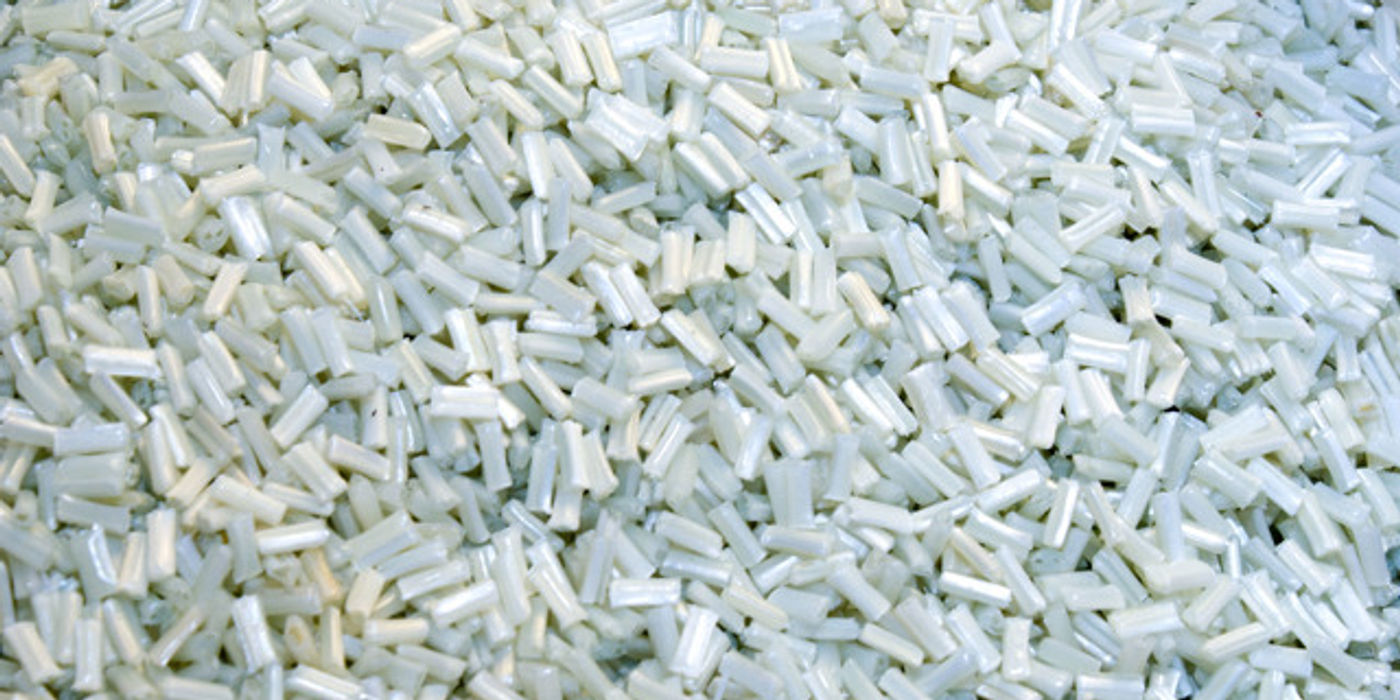
Standard polyamide grades lose significant toughness below -20°C as chain mobility freezes out. Frost-resistant grades combine impact modification with low-temperature plasticisation and stabilisation, ensuring retained elongation, impact strength and dielectric properties across the full temperature range from -60°C to +140°C.
Technical Specifications
| Base resin | PA6 / PA66 |
| Temperature range | -60°C to +140°C |
| Notched impact (-40°C) | ≥ 15 kJ/m² |
| Notched impact (-60°C) | ≥ 8 kJ/m² |
| Elongation at break (−40°C) | ≥ 30% |
| Density | 1.10 – 1.15 g/cm³ |
| Dielectric strength | 15 – 20 kV/mm |
Applications
- Household packaging for frozen foods, freezer and refrigerator components
- Roofing fasteners and thermal-insulation fixings exposed to outdoor climates
- Automotive sealing elements, underbody pipelines, cable insulation
- Shipbuilding deck fittings, hatch seals and marine cable management
- Aviation ground-support equipment operating on cold runways
- Oil-well wellhead components and subsea connectors
- Power-line insulators in Arctic and sub-Arctic installations
Advantages
- Certified reliable down to -60°C — covers Russian, Scandinavian and Arctic service conditions
- High dimensional stability — low creep even under sustained cold load
- Low coefficient of friction retained at low temperature
- 7× lighter than metal alternatives
- Excellent resistance to de-icing agents, road salts and hydraulic fluids
- UV-stabilised variants available for prolonged outdoor exposure
- Food- and water-contact compliant grades available
Technical Background
The glass transition temperature (Tg) of dry PA6 is approximately +50°C; of conditioned PA6 it drops to about -15°C. Frost-resistant grades suppress Tg further through controlled plasticisation and incorporate nucleating agents to maintain a fine, uniform spherulite structure that resists brittle crack propagation even at cryogenic temperatures.